
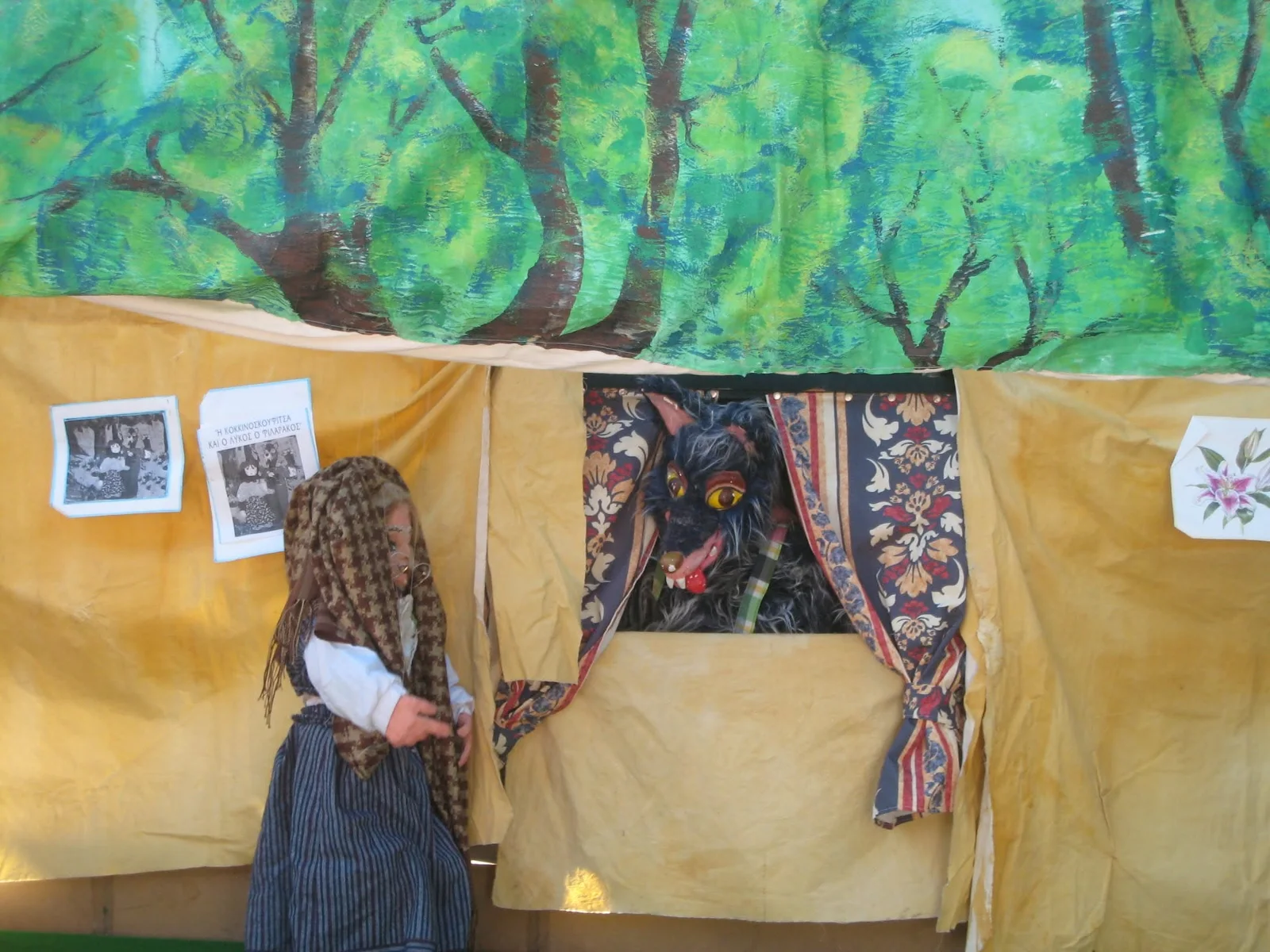
Story structure
A short story can begin with a character in a familiar place, introduce a problem, and end with a change or discovery. Keep the sequence clear without fixing every detail. Children can suggest what happens next, and different endings can be explored without choosing a single correct answer.
Character development
A believable character needs a point of view, not an elaborate costume. Decide what it wants, how it moves, and how it responds to others. Try showing the same emotion with two different gestures, then invite participants to describe what they noticed.
Dialogue
Dialogue is a conversation with a purpose: characters ask, respond, disagree, and discover. Keep exchanges short and leave pauses for listening. A puppet can invite a response through a question or gesture, without making participation compulsory.
Movement
A puppet becomes expressive when its movement has intention. Establish where it looks, how it arrives, and when it becomes still. A slow turn or a carefully timed pause often communicates more clearly than continuous motion.
Voice
A performer’s voice can distinguish a character through pace, rhythm, and tone rather than exaggerated volume. Practise one sentence in several ways and notice how its meaning changes. Respect individual comfort and offer non-speaking roles alongside vocal performance.
Emotional expression
A fictional character can offer a gentle way to discuss feelings. Ask what the character might be experiencing, what it needs, or how a friend could respond. Accept different interpretations and do not pressure anyone to relate the story to a private experience.
Visual design
Design begins with the relationship between appearance and movement. Consider the figure’s weight, silhouette, handle or control, and visibility to its audience. Test a simple prototype before decorating it; use age-appropriate materials and avoid loose small parts when young children are involved.
Audience engagement
An audience participates through attention, anticipation, and response. Clear sightlines, a comfortable sound level, and a coherent story help people follow the action. Invite contributions thoughtfully, and respect the choice to enjoy a performance without speaking.
Creative collaboration
Collaboration combines different contributions into a shared piece of work. One person might make scenery, another suggest dialogue, and another guide a character. Agree on the task together and value preparation, listening, and observation as well as performance.
Bringing Characters and Stories to Life
Puppet theatre combines narrative, movement, visual expression, and performance.
A believable character needs a point of view, not an elaborate costume. Decide what it wants, how it moves, and how it responds to others. Try showing the same emotion with two different gestures, then invite participants to describe what they noticed.